Flat pattern
Unfold the 3D design into a flat blank.
Manufacturing services · Chapter D · Method 19
Flat sheet is cut, formed and joined into brackets, enclosures and frames. Fast and economical from one-offs to medium batches.
How it works
A labelled schematic of the process (not to scale), and the four steps every job goes through.
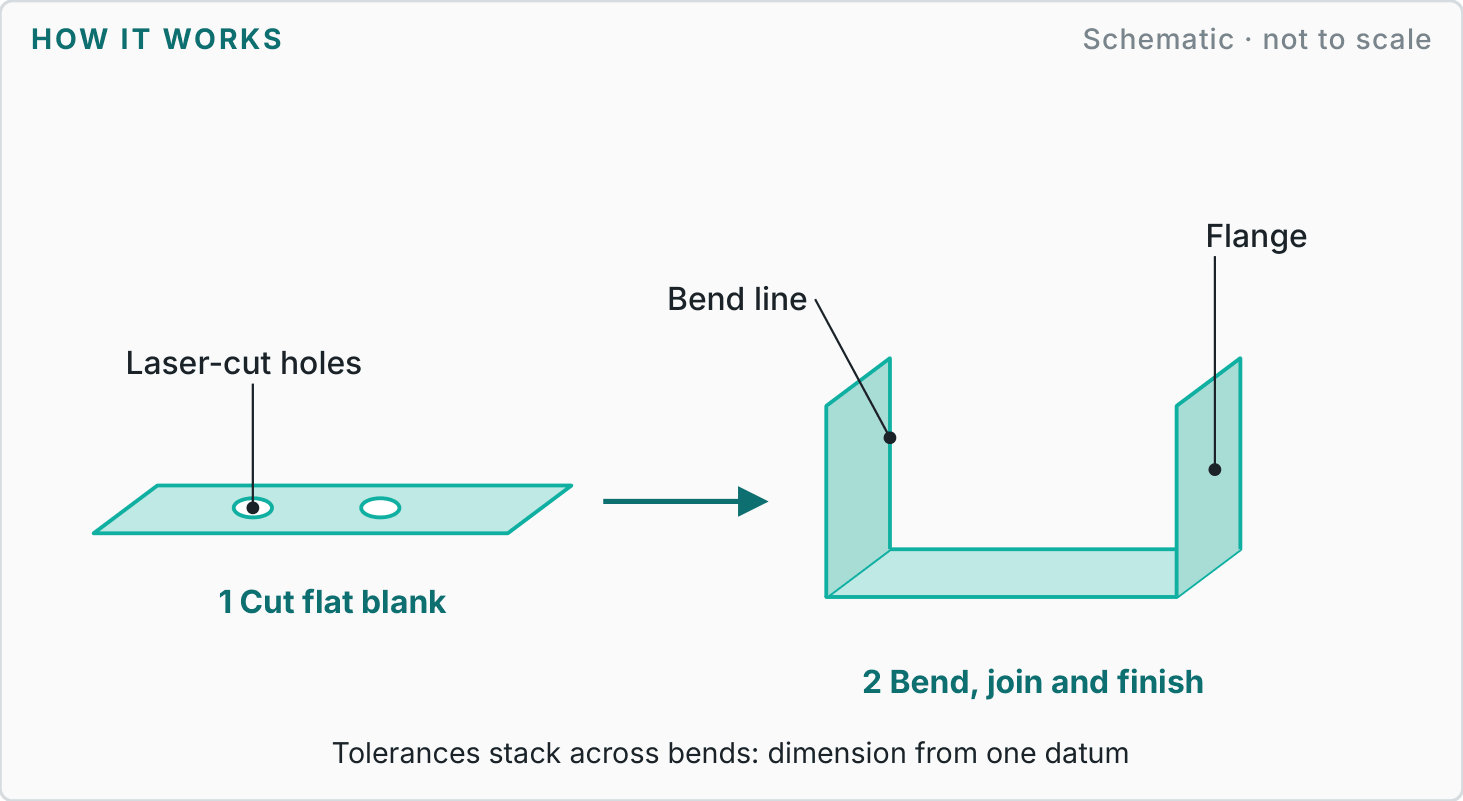
Unfold the 3D design into a flat blank.
Laser, punch or shear the blank.
Bend on a press brake; add hardware.
Weld or rivet, then powder coat or plate.
Reference figures
Typical industry values to help you plan. We agree the figures for your part on the drawing.
| Materials | Mild steel, stainless (304, 316), aluminium (5052, 6082), galvanised steel, copper and brass. |
|---|---|
| Finishes | Deburred as standard; powder coated, painted, anodised, zinc plated or brushed. |
| Design guidance |
|
| Best suited to | Enclosures, brackets, chassis, guards and stainless frames for mould trays. |
| Watch-outs | Tolerances stack across several bends; hems and curls need special tooling. |
More in chapter D
Next step
Send a sketch, photo, sample or CAD file with your quantity and target date. We will recommend the most sensible route and explain the trade-offs before quoting.
Reference figures are typical published industry values for planning, not a guarantee; final tolerances, materials and finishes are agreed in writing for each project.