TCI Group · Materials
Six material families we run across the group.
This is the umbrella view. Each division carries deeper detail for the grades they actually stock and process day to day.
Six material families
What sits on our shelves.
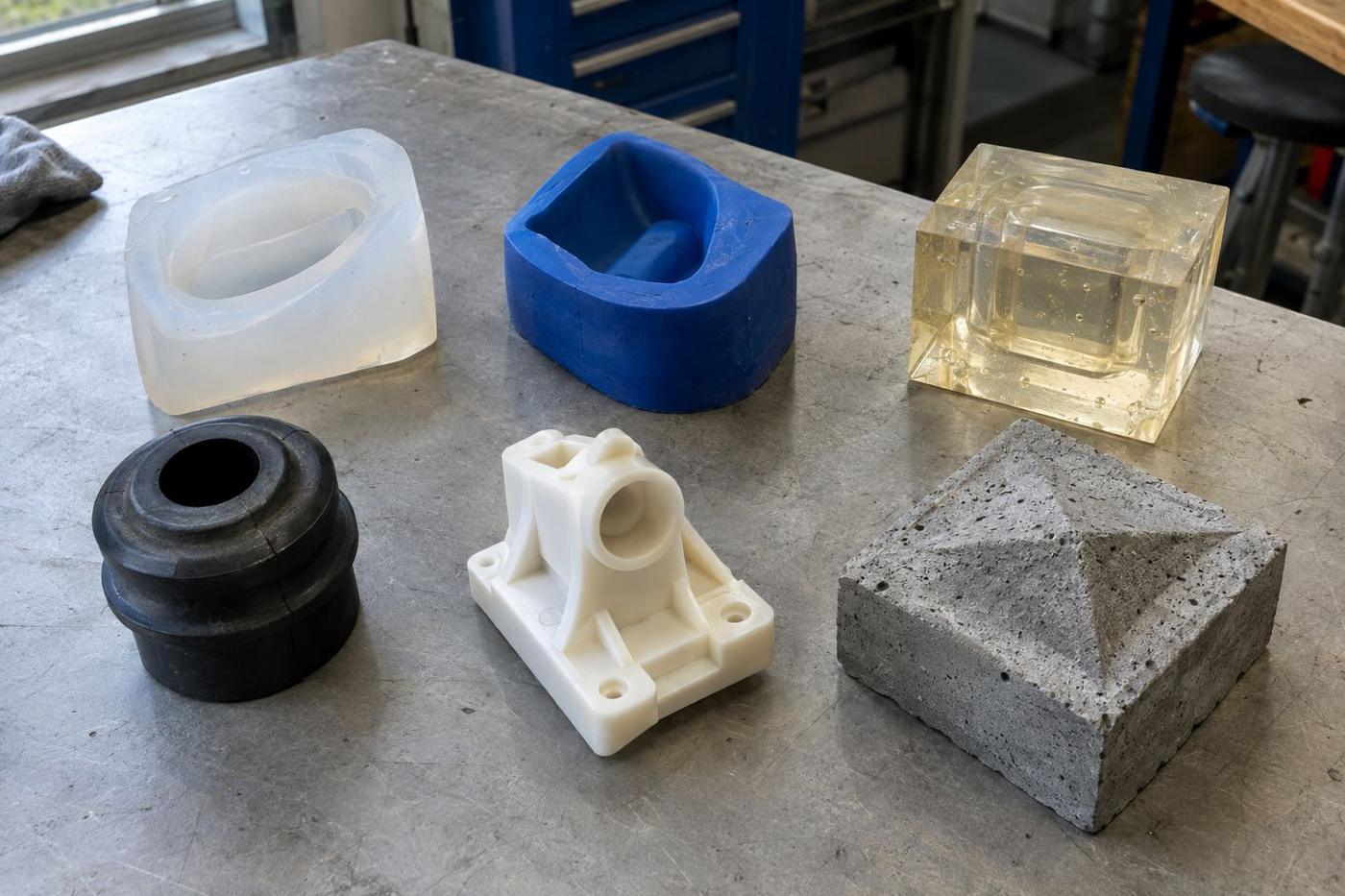
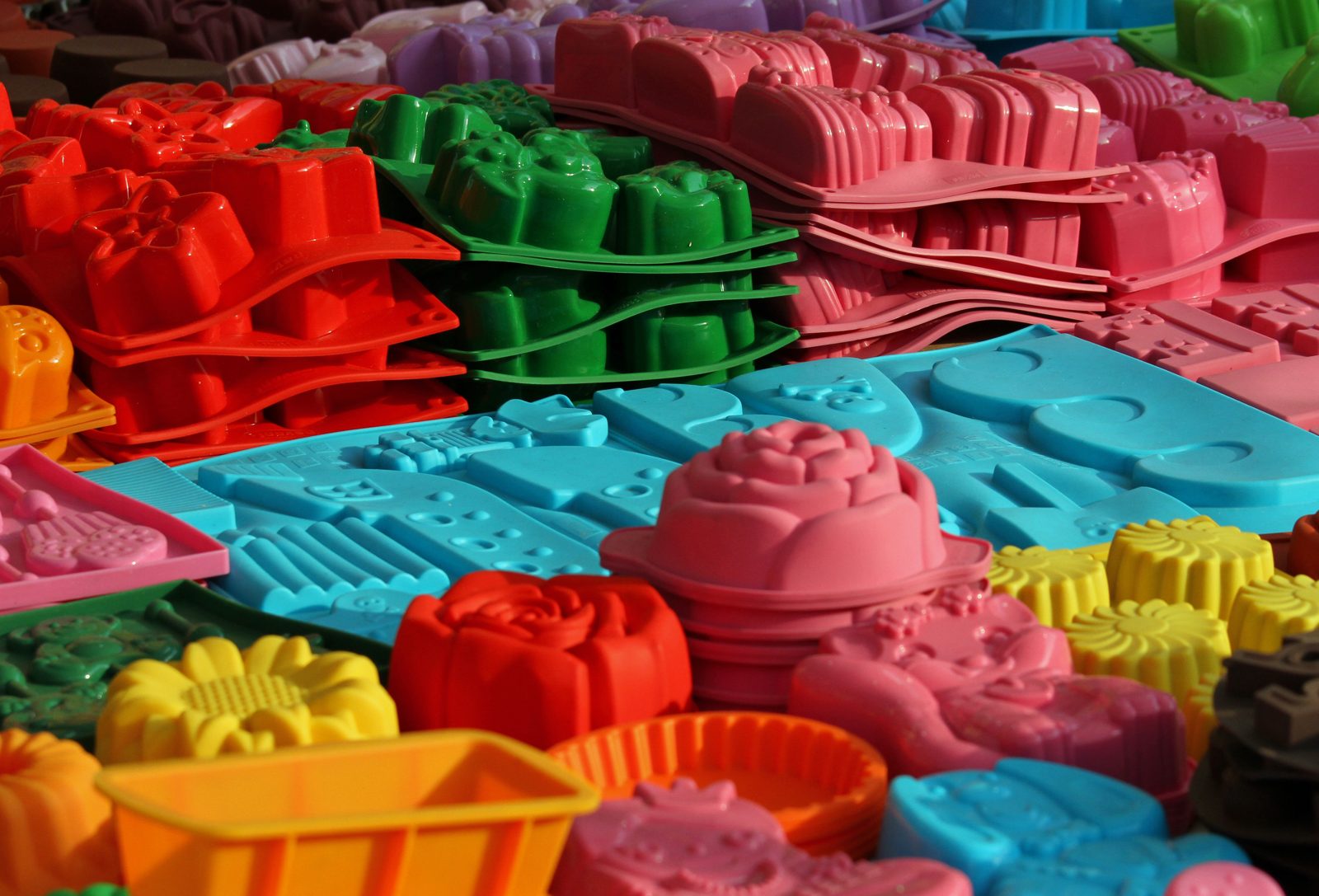
Platinum-cure silicone
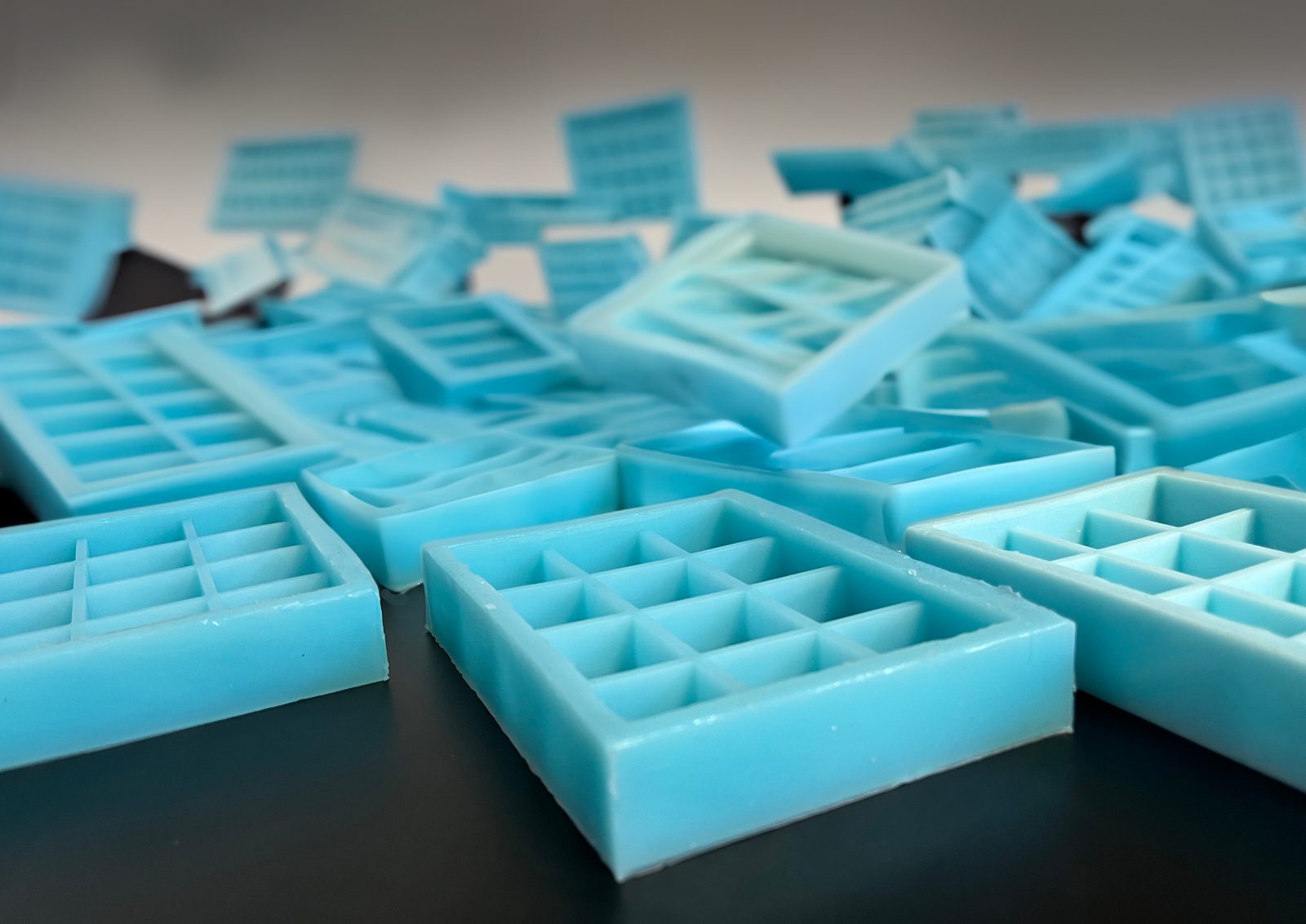
The default for food, medical and skin-contact. Doesn't outgas, doesn't discolour, doesn't inhibit. Available across every division that needs food-contact or long-term repeatability. More expensive than tin-cure but almost always worth it for regulated applications.
Tin-cure silicone
Cheaper. Fine for decorative and industrial casting. Shorter shelf life. Sensitive to catalyst inhibitors (plasticine, sulphur clay) so we ask what the master is made of. Widely used in TCI Mouldings and TCI Construction.
Polyurethane
Fast and cheap for prototypes. Not food-safe. Can be cast in hard, semi-rigid or flexible forms. Cures fast. Used across TCI Mouldings and TCI Products for prototype tooling and prototype parts.
Natural and nitrile rubber
For parts needing oil or fuel resistance beyond silicone. Compression moulded. Higher volume, excellent unit cost at scale. TCI Products.
EPDM
Weather and steam resistant. Common in construction sealing and outdoor applications. TCI Products and TCI Construction.
HTV silicone
High-consistency solid silicone for compression moulding. The material behind most volume silicone parts. TCI Products.
Materials in combination
When one material isn't enough.
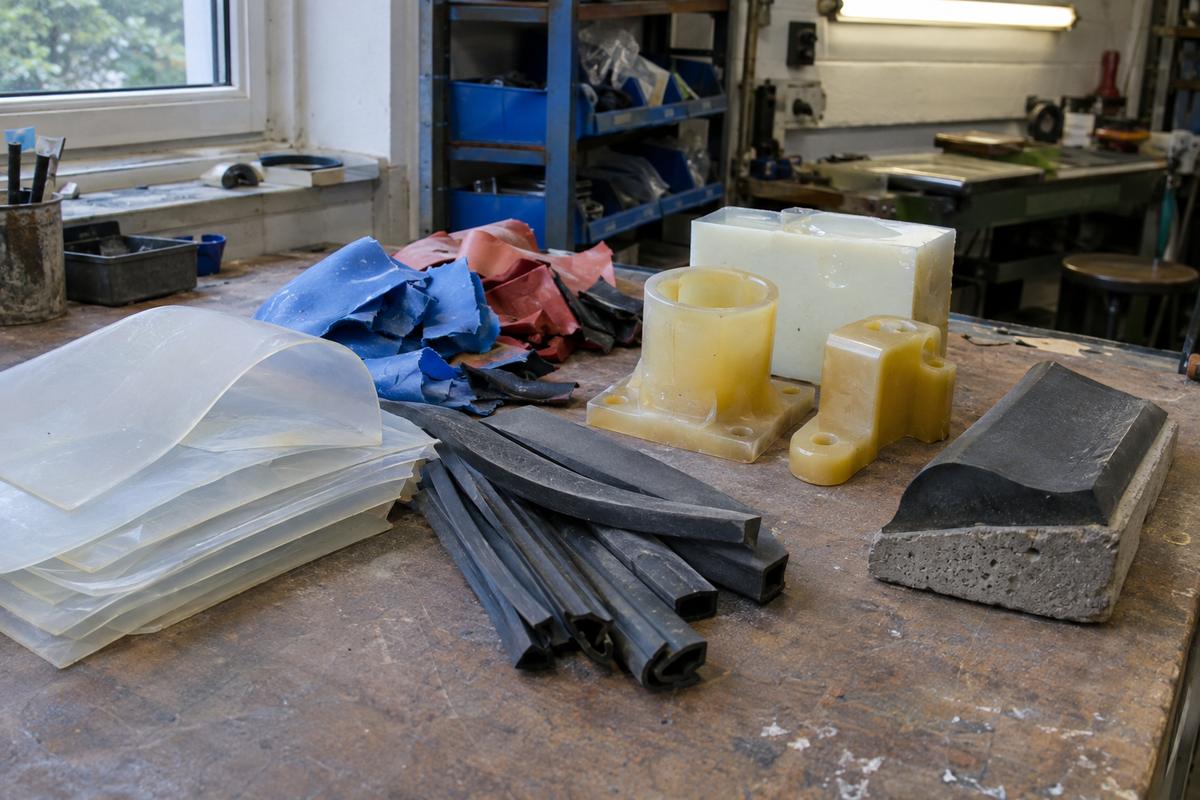
Silicone and polyurethane
Soft and rigid together, or PU parts from silicone tools.
Silicone and metal inserts
Bonded or captured inserts moulded in.
Silicone and electronics
Potting, encapsulation and sealed covers.
Material selection consult
A short conversation before you commit.
Materials-agnostic advice
No material to push.
Silicone vs PU vs rubber
The plain-English guide.
How we pick
Three questions that narrow the field.
- 01
What does the part contact?
Food, skin, oil, solvent, alkaline concrete. This is the biggest driver. It usually eliminates two or three materials on the spot.
- 02
What temperature range?
Both extremes matter. Freezer to oven, autoclave, weather exposure — each has a material implication.
- 03
What lifecycle?
One shot, hundreds of cycles, thousands of cycles. Cure chemistry and hardness both come into it.
Data sheets
Available on request, always shared before ordering.
Every grade we use has a manufacturer's data sheet, and we'll pass it on before you commit to any material. If you're planning around a specific spec — food-contact declaration, medical grade certification, weather-exposure rating — tell us and we'll send the relevant document.
The group
Deeper by division
Each division carries deeper material detail for the grades they actually use day to day. This umbrella page is the map, not the manual.
At a glance
The idea in a picture.
Five brands, one team
Swipe to see the whole diagram
Get in touch
Not sure which division? Tell us what you're making.
Send us a sketch, a photograph, or a paragraph. We'll come back with the right division, the right route, and an honest sense of what it will take.
Real people, a real workshop
You deal with the people who make it.
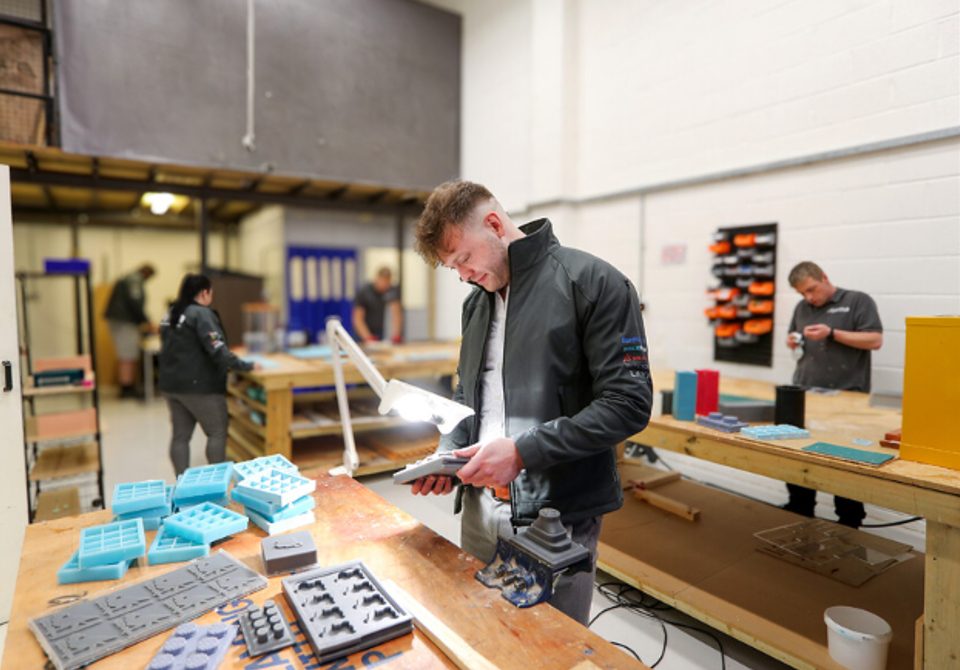
No call centre and no middlemen. When you contact TCI Group, you speak to the team who design, build and check your mould.
- A real Warwickshire workshopUnit 15, Waterloo Park, Bidford-on-Avon, Alcester B50 4JG.
- Real people on the phoneCall the team on 01789 224228, Monday to Friday.
- The same team on every jobDesign, production and aftercare come from the people you see here.
- Five brands, one teamMoulds, culinary, construction and contract products, all run from Bidford-on-Avon. See the divisions.
 Thomas LaneManaging Director
 George PrestonDesign & Project Manager
 Kelly BallingerHead of Partnerships
 Jim AndertonProduction Manager
 TheodoreEmployee Welfare