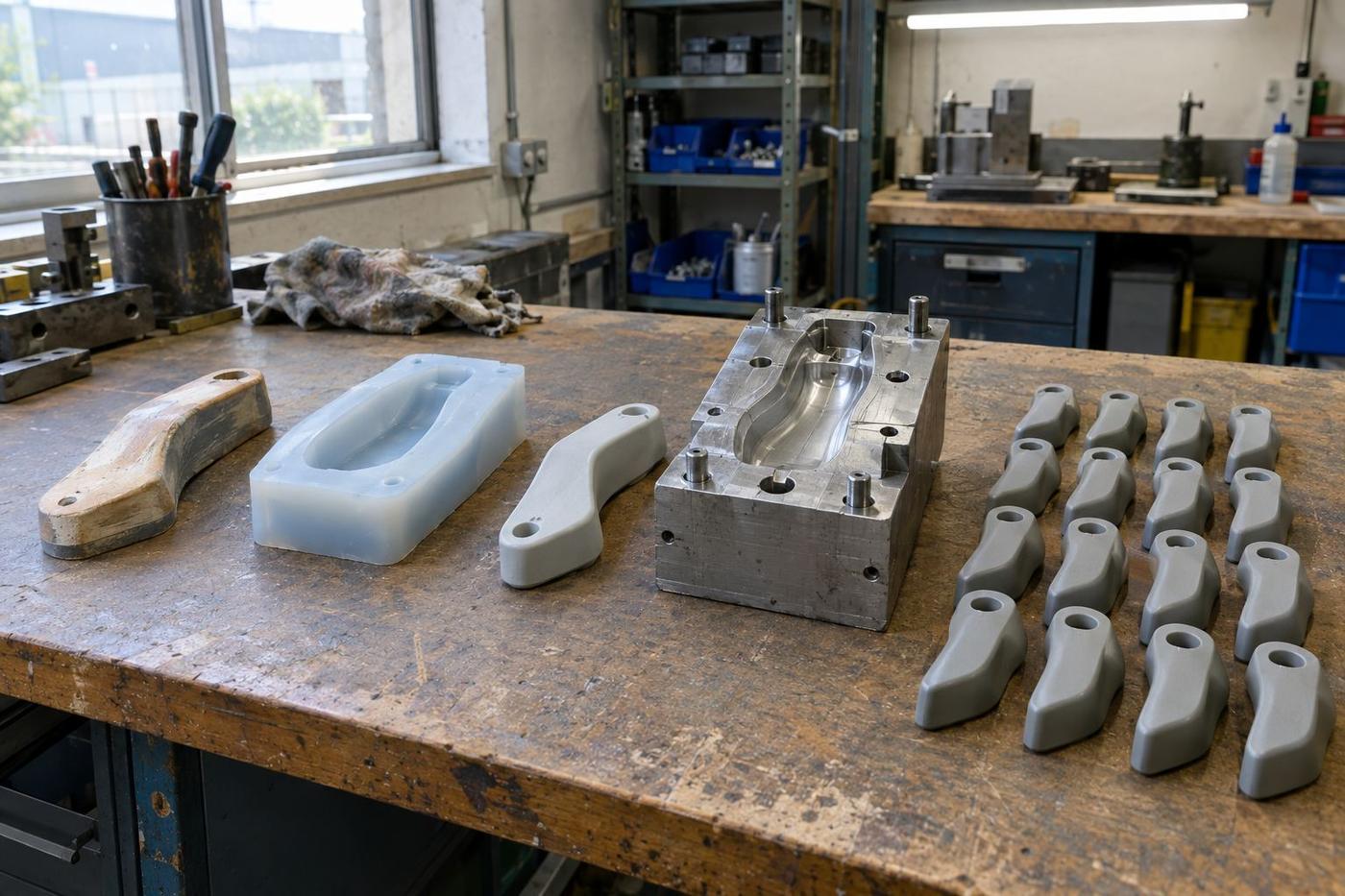
Buyer's guide
Prototyping through to production, across the group.
The gap between a working prototype and a running production tool is where a lot of programmes stumble. Here's the path we recommend, and where the tipping points sit.
Intro
Prototyping through to production, across the group.
Not every part follows this journey — some are one-offs, some jump straight to injection. But most parts we see move through recognisable stages, and knowing them helps you plan tooling spend properly.
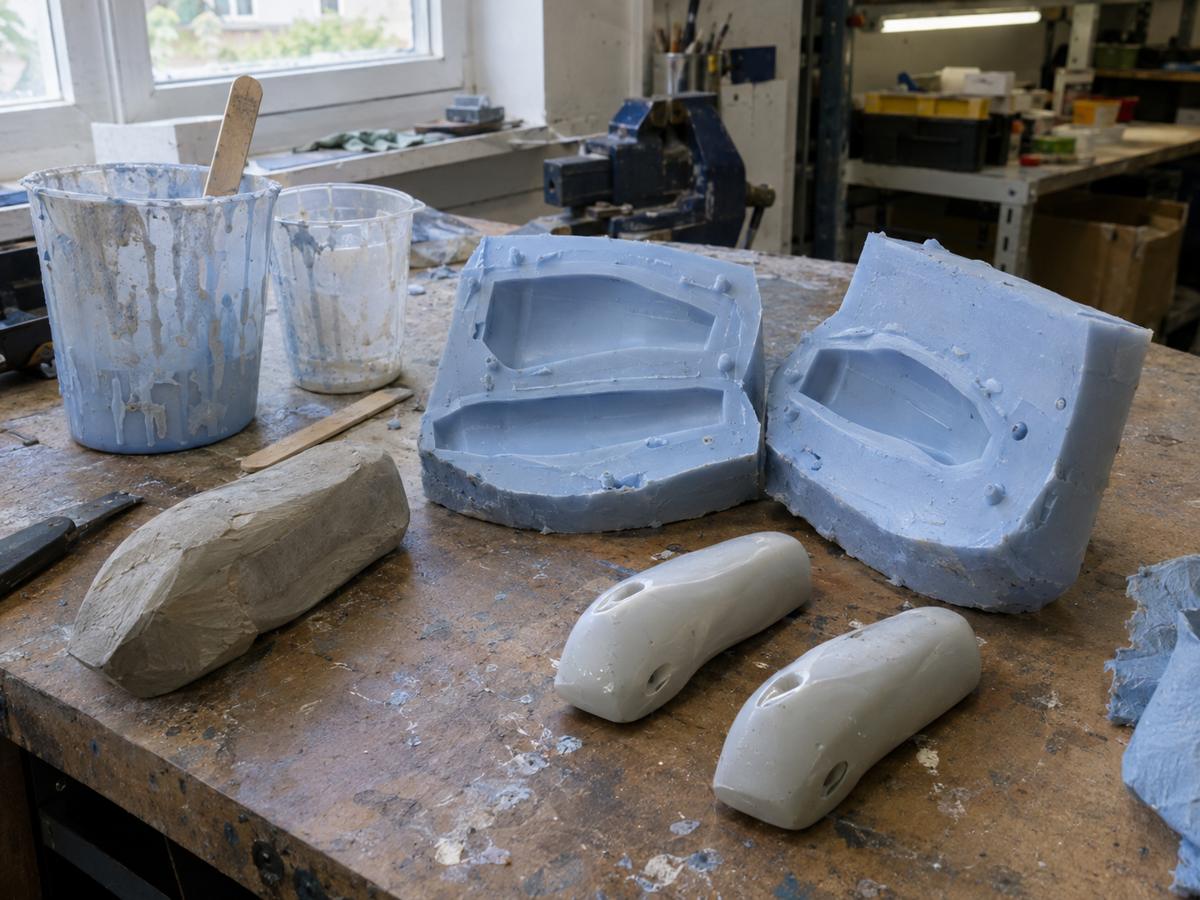
Stage 1 — hand-cast prototype
One tool, a few parts. Silicone or PU, poured by hand. Days to weeks. Good enough to hold, photograph, test-fit, pitch. Not designed to make hundreds of parts.
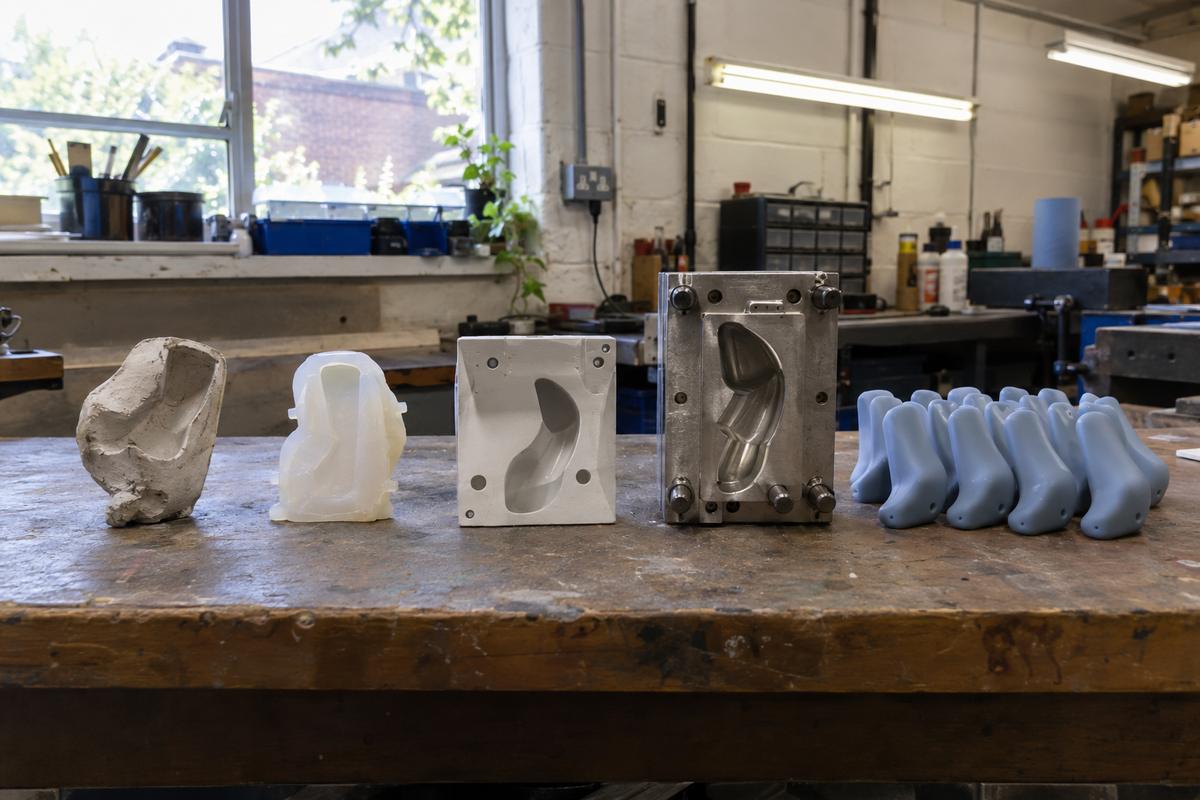
Stage 2 — cast production run
Same tool or a slightly upgraded one, still silicone or PU. Tens to a few hundred parts. Cheap enough to run for early customers or trade-show samples. Every part has a small variance but they're usable.
Stage 3 — compression tool
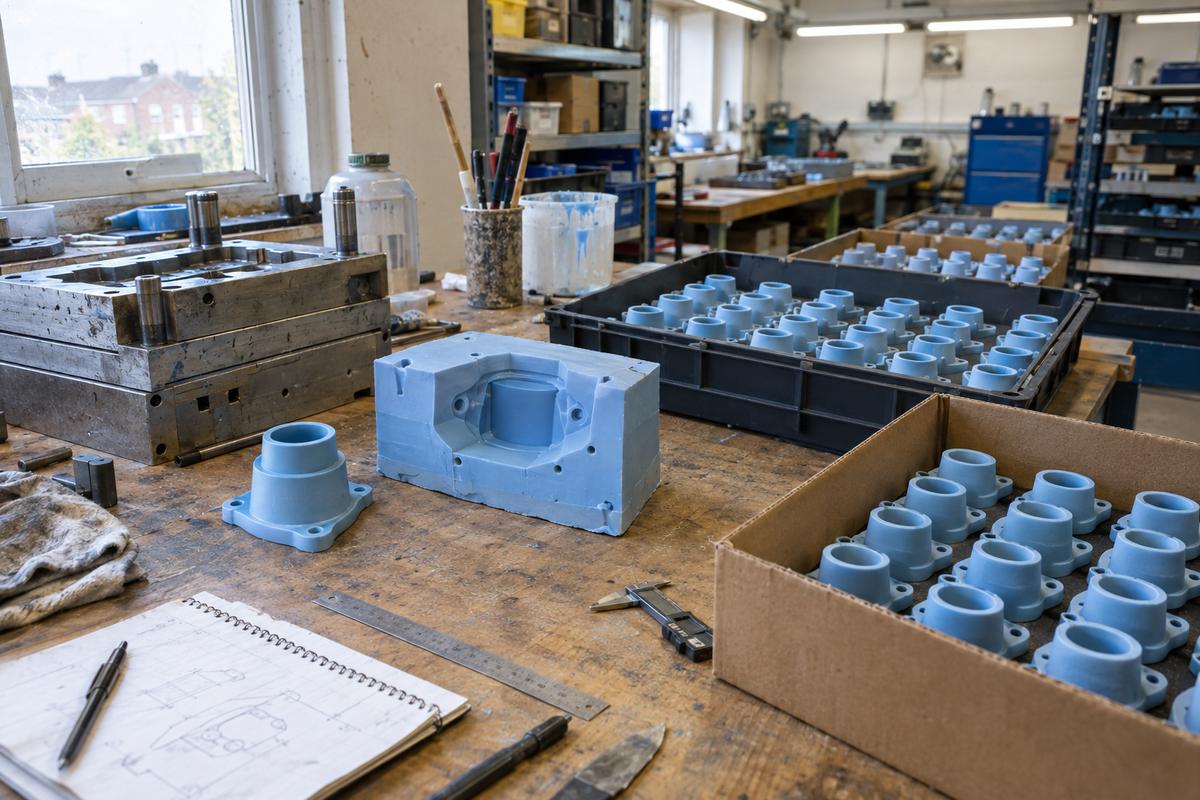
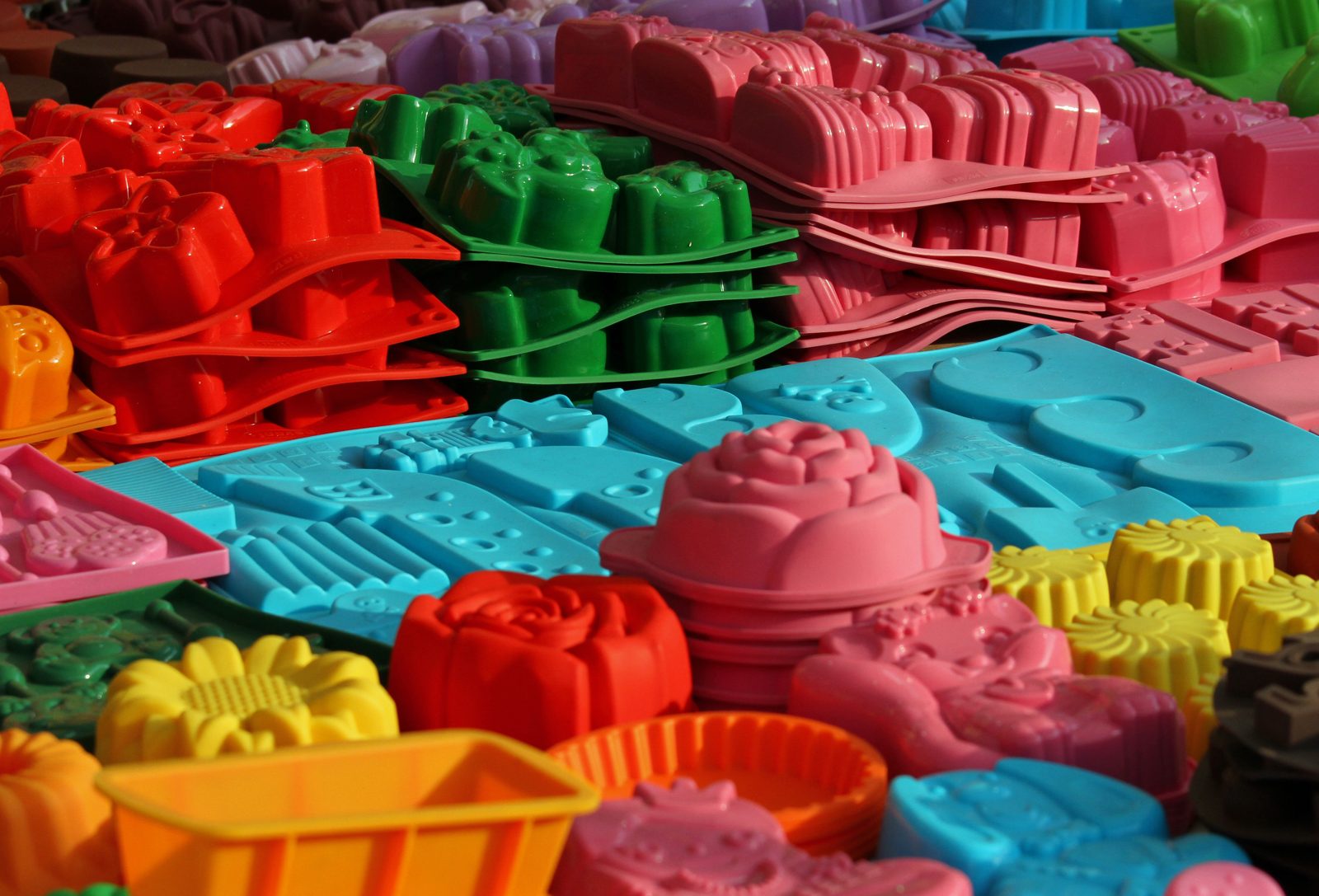
Steel or aluminium tool, solid silicone or rubber pressed and cured. Hundreds to a few thousand parts a year. Unit cost drops, consistency goes up, tooling capital is real but not huge.
Stage 4 — LSR injection
Liquid silicone rubber, injected at pressure into a steel tool. Tens of thousands to hundreds of thousands per year. Highest unit consistency, lowest unit cost, tooling capital is significant.
Tipping points
The move from stage 2 to 3 usually makes sense above a few thousand parts a year. Stage 3 to 4 usually above tens of thousands. Below that, you're paying for capital tooling you don't need.
Quick reference
A one-glance version of the guide above.
Ones and tens
→ Hand-cast
Tens to hundreds
→ Hand-cast or small production cast tool
Hundreds to low thousands
→ Cast production tool, or compression if you'll grow
Thousands to tens of thousands
→ Compression
Tens of thousands upwards
→ LSR injection
In closing
One more thing.
We can start you at stage 1 and move you through each stage as the volume justifies it. Same engineer, same paperwork, no re-explaining. That continuity is a lot of what having one supplier across the group gives you.
Related reading
Where to read next.
Same engineer, prototype through to production.
You started with one hand-cast mould. The part is signed off. You're ready for a hundred a week. The engineer who built…
One tool this month. A hundred a week by summer. Same team throughout.
Start-ups don't want to change supplier every time volume steps up. Start with a hand-cast prototype, take it through…
Processes
The five moulding routes explained.
The group
Where this fits in the group
Four specialist teams share our workshop, our engineering bench and a single quality system. Pick a doorway, or ring us and we'll route you.
At a glance
The ideas in pictures.
Which route suits your quantity
Swipe to see the whole diagram
One enquiry, the right team
- 01One enquiryTell us what you need
- 02Right divisionWe bring in the specialists
- 03One quoteCovering every part of the job
- 04Named contactOne person keeps it moving
- 05DeliveredMoulds, parts or both
Swipe to see the whole diagram
Get in touch
Not sure which division? Tell us what you're making.
Send us a sketch, a photograph, or a paragraph. We'll come back with the right division, the right route, and an honest sense of what it will take.
Real people, a real workshop
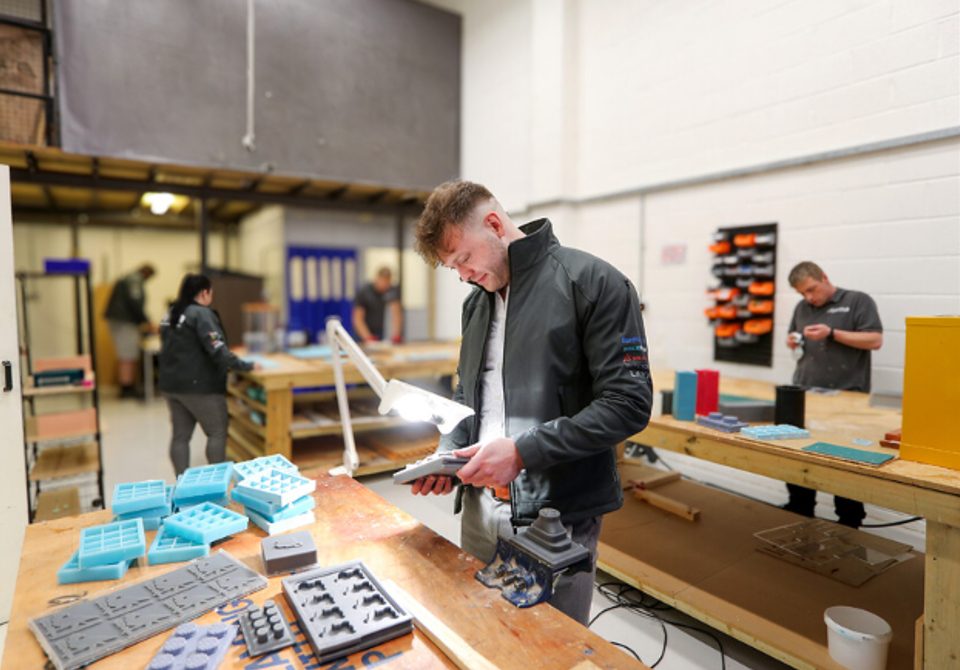
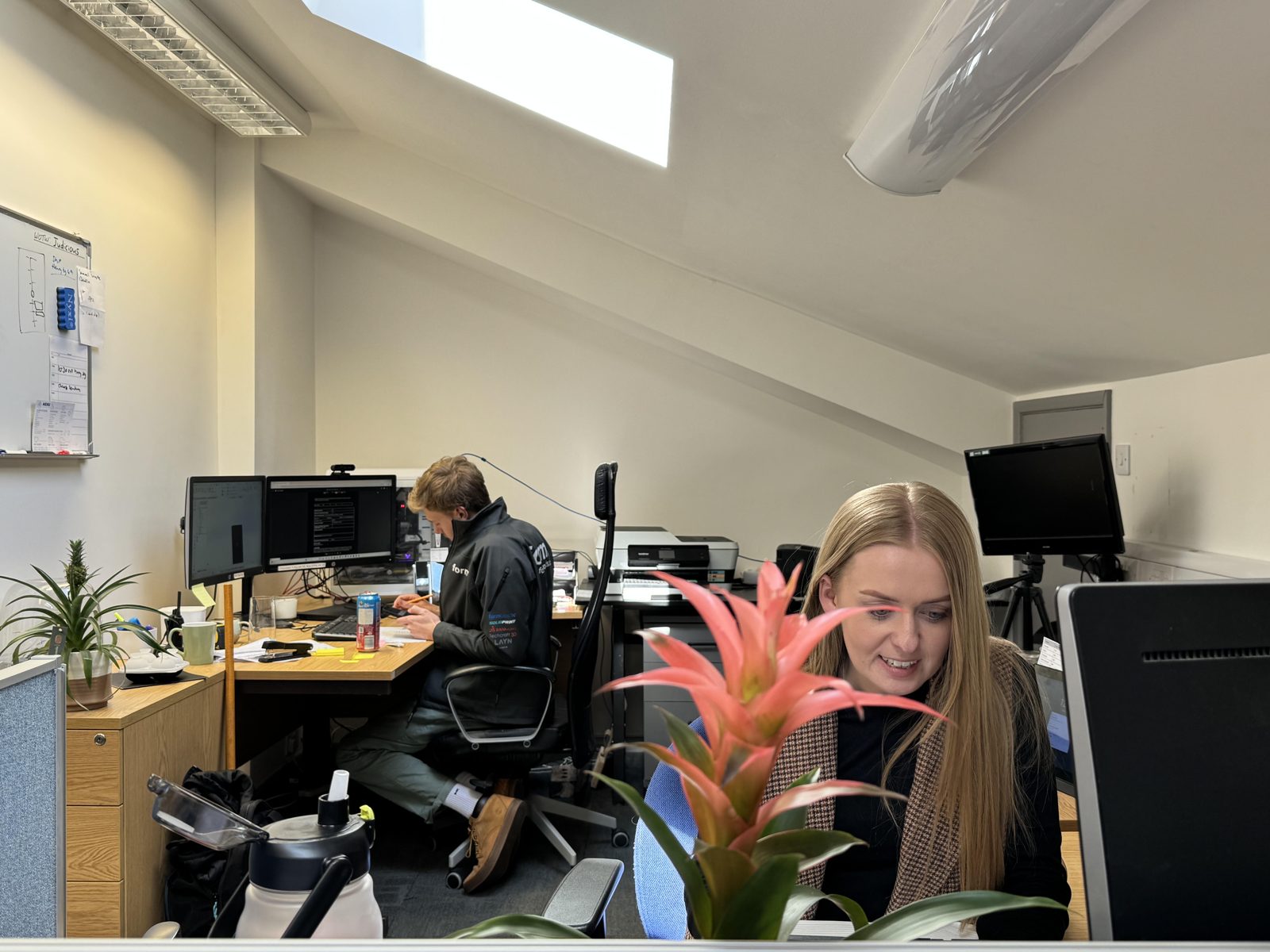
You deal with the people who make it.
No call centre and no middlemen. When you contact TCI Group, you speak to the team who design, build and check your mould.
- A real Warwickshire workshopUnit 15, Waterloo Park, Bidford-on-Avon, Alcester B50 4JG.
- Real people on the phoneCall the team on 01789 224228, Monday to Friday.
- The same team on every jobDesign, production and aftercare come from the people you see here.
- Five brands, one teamMoulds, culinary, construction and contract products, all run from Bidford-on-Avon. See the divisions.
 Thomas LaneManaging Director
 George PrestonDesign & Project Manager
 Kelly BallingerHead of Partnerships
 Jim AndertonProduction Manager
 TheodoreEmployee Welfare