Electrode
Machine the electrode as the negative of the form.
Manufacturing services · Chapter C · Method 18
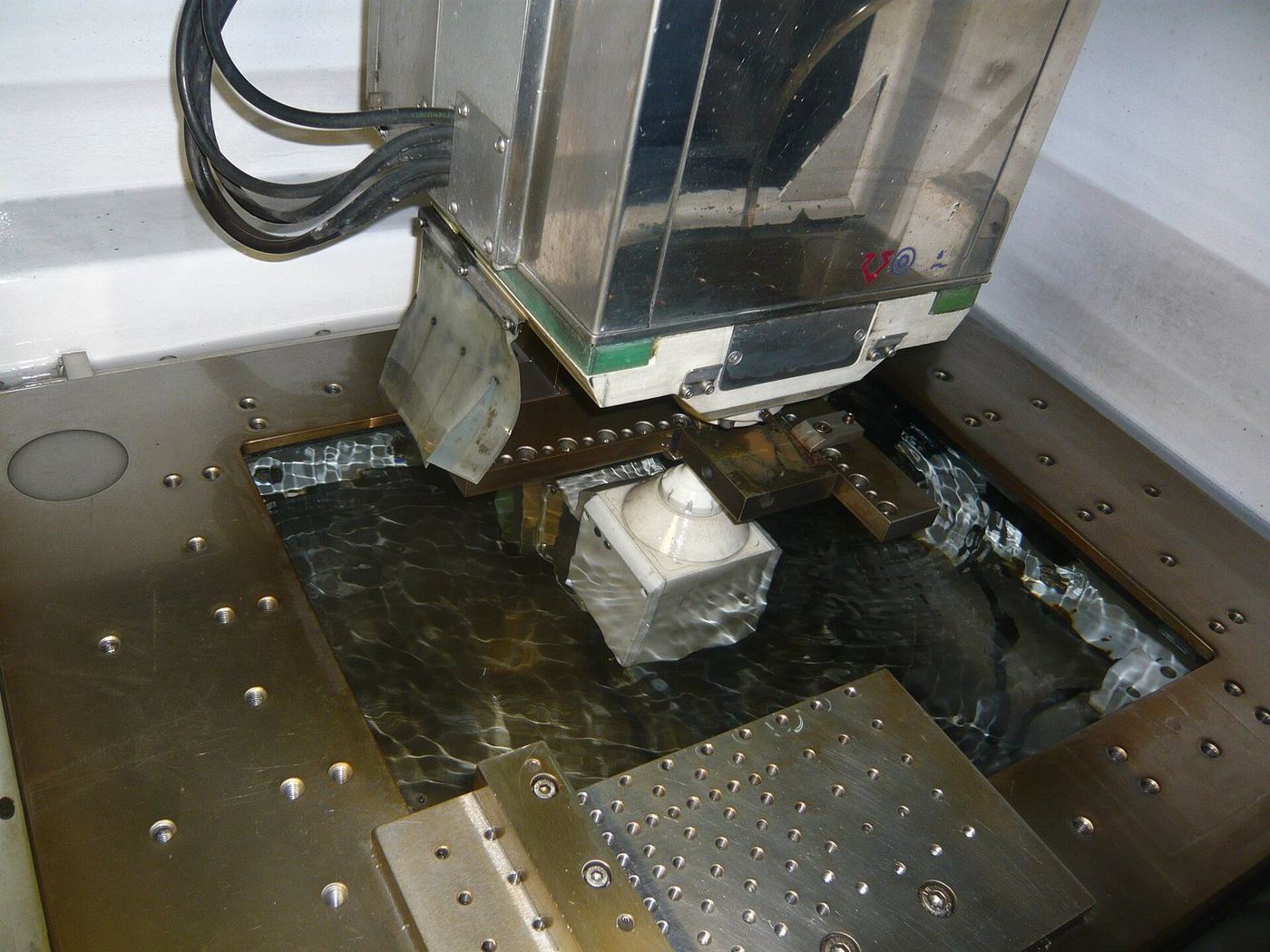
A shaped graphite or copper electrode is plunged into the workpiece under dielectric fluid, eroding its form into hardened steel.
How it works
A labelled schematic of the process (not to scale), and the four steps every job goes through.
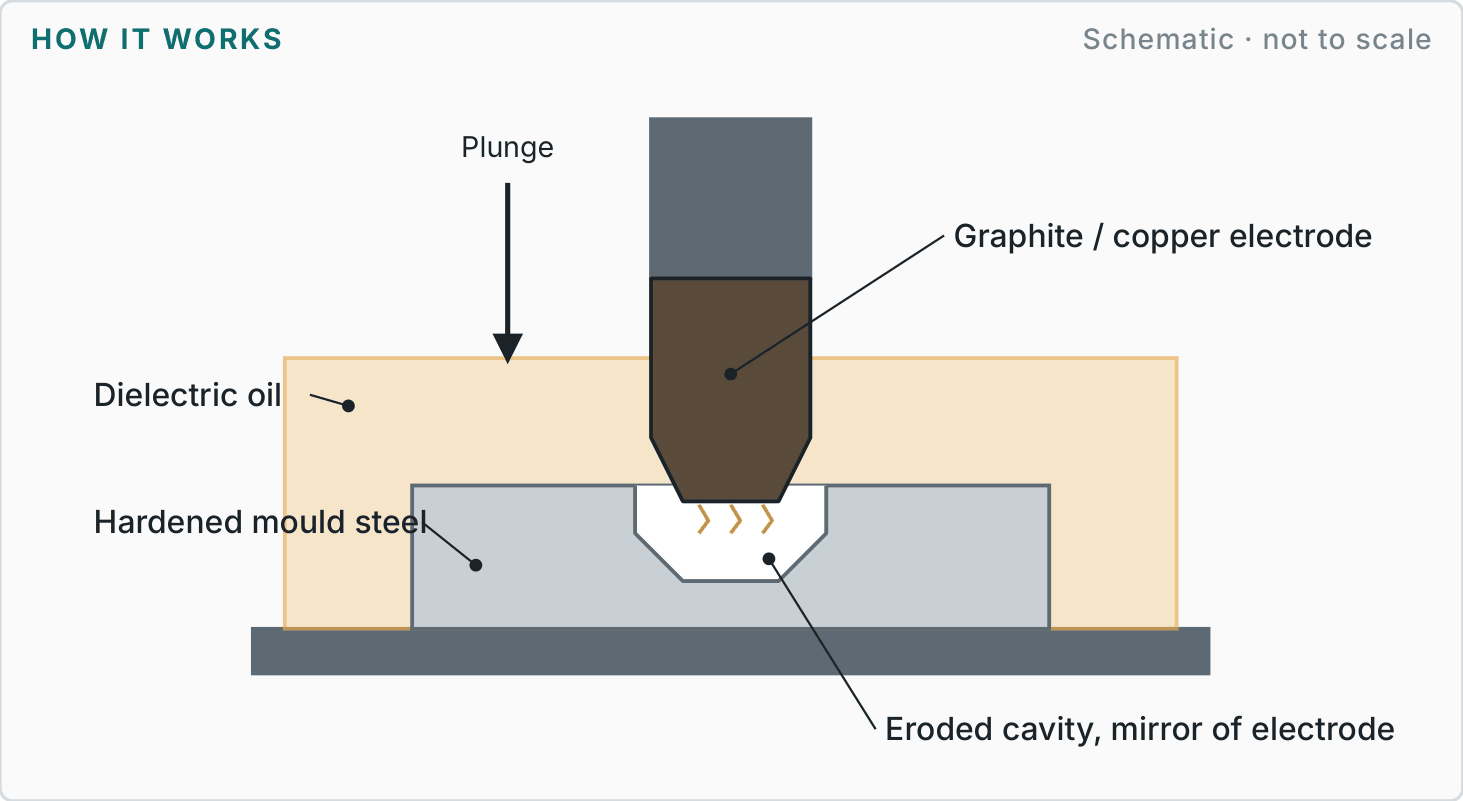
Machine the electrode as the negative of the form.
Align the electrode over the workpiece in oil.
Sparks reproduce the electrode shape.
Change to a finishing electrode for texture.
Reference figures
Typical industry values to help you plan. We agree the figures for your part on the drawing.
| Materials | Tool steels (hardened), carbide; graphite or copper electrodes. |
|---|---|
| Finishes | VDI 3400 EDM textures from fine to coarse; can be polished afterwards. |
| Design guidance |
|
| Best suited to | Injection and LSR mould cavities, deep ribs, textured surfaces and logos. |
| Watch-outs | Slow; electrodes add cost and wear during erosion. |
More in chapter C
Next step
Send a sketch, photo, sample or CAD file with your quantity and target date. We will recommend the most sensible route and explain the trade-offs before quoting.
Reference figures are typical published industry values for planning, not a guarantee; final tolerances, materials and finishes are agreed in writing for each project.