Nest
Nest parts on the sheet to reduce waste.
Manufacturing services · Chapter D · Method 20
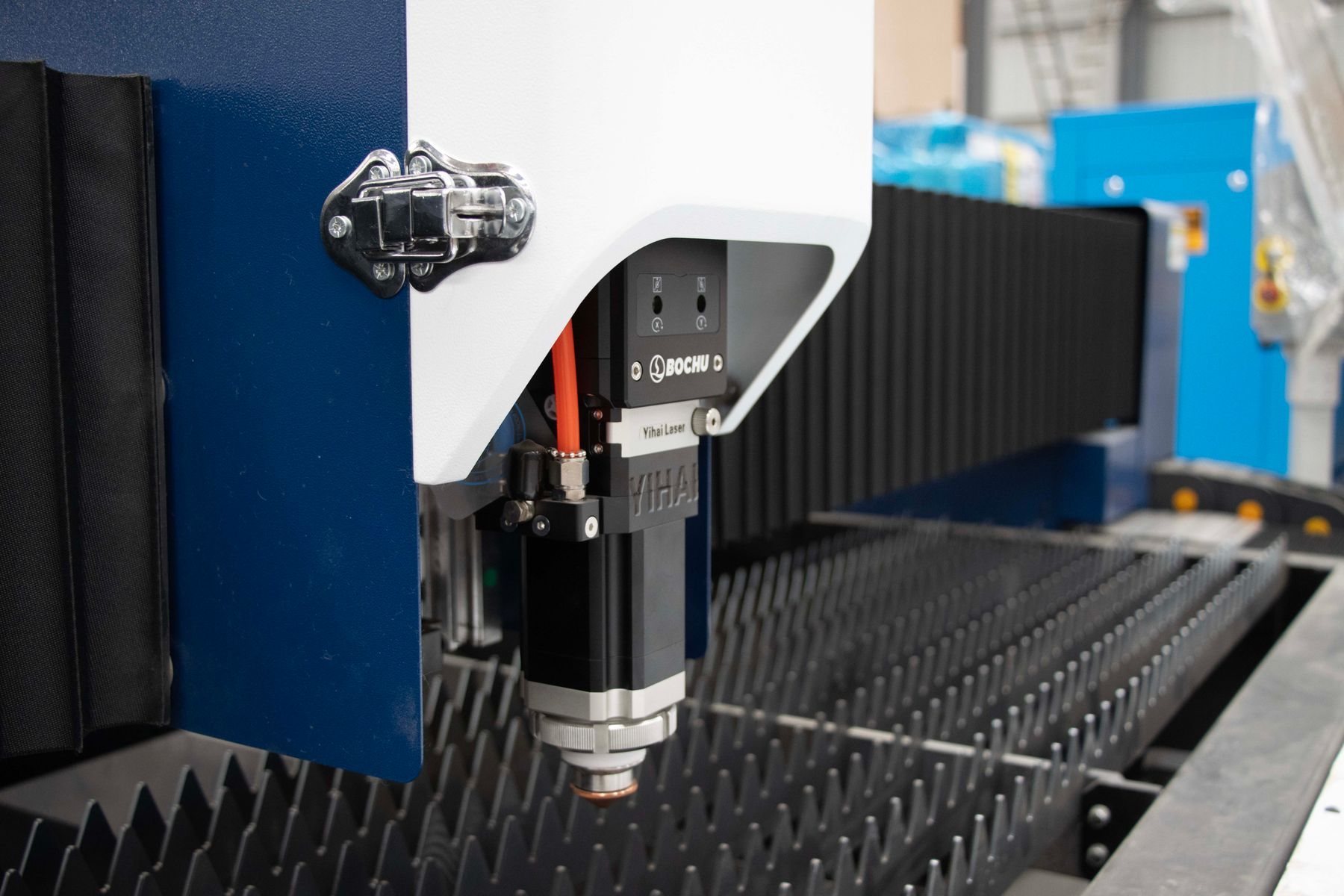
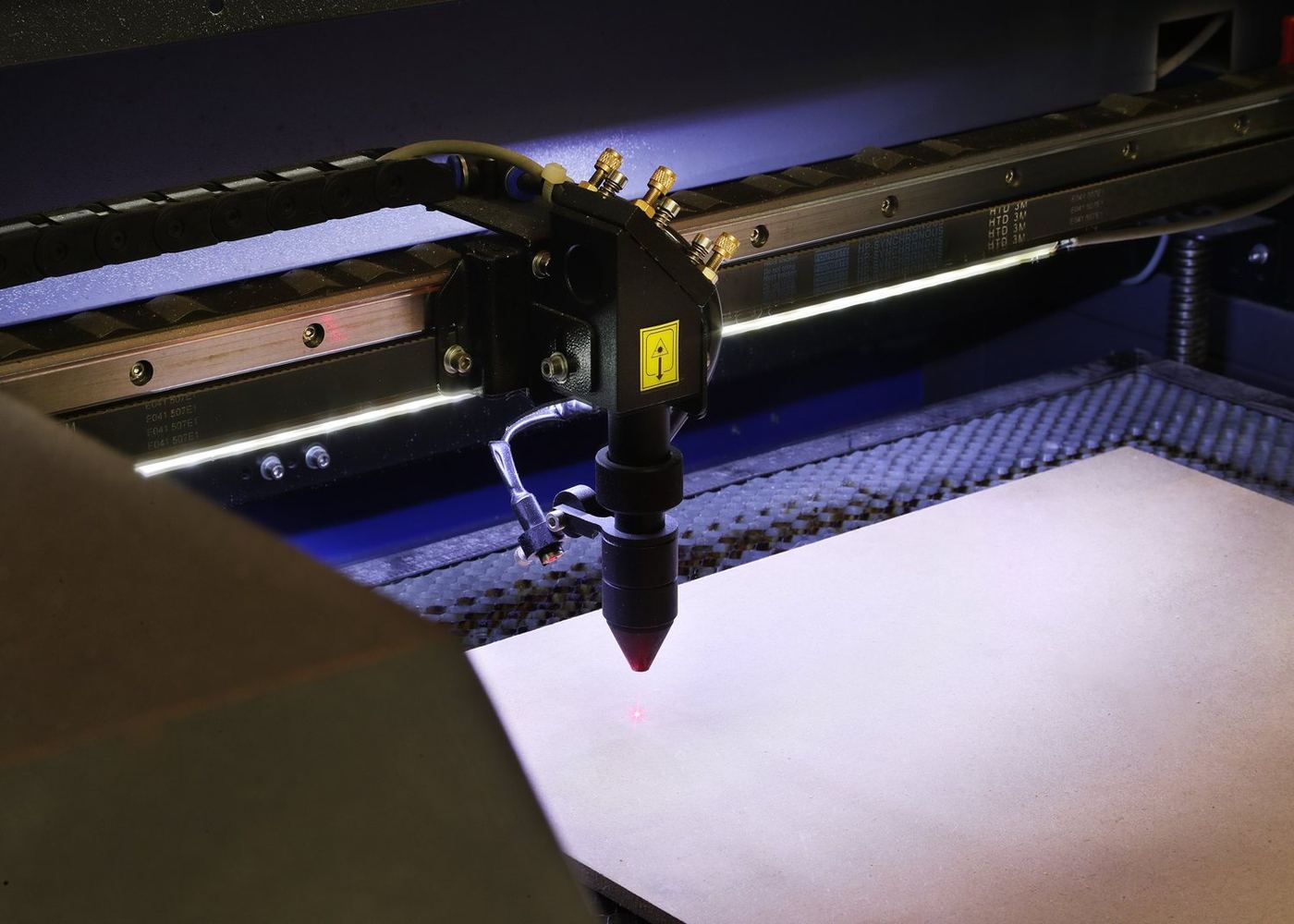
A focused fibre or CO2 laser beam melts or vaporises a narrow kerf, guided by CNC. Accurate, fast and burr-light on sheet and plate.
How it works
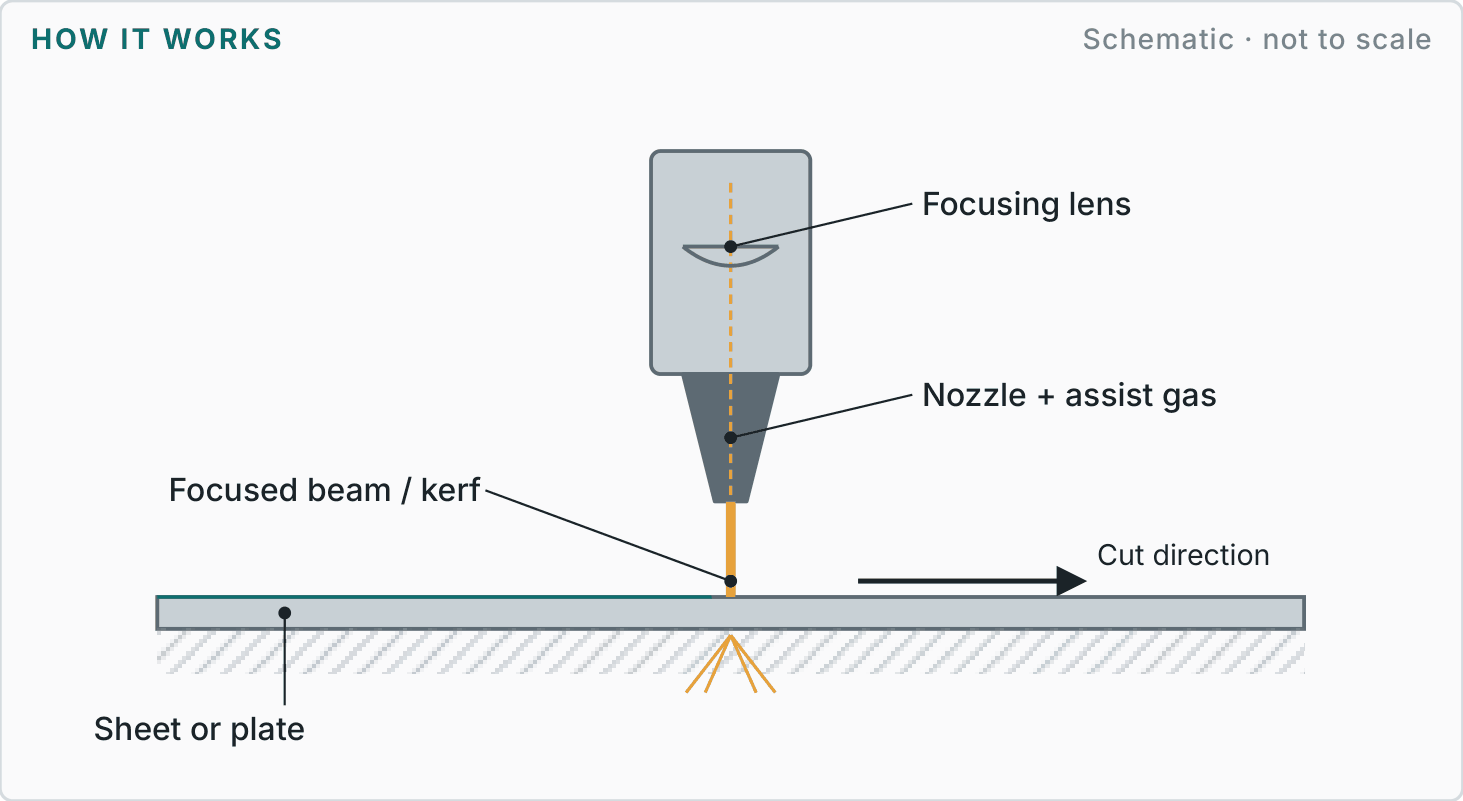
A labelled schematic of the process (not to scale), and the four steps every job goes through.
Nest parts on the sheet to reduce waste.
The beam pierces the sheet at a lead-in.
Assist gas clears the kerf as the head moves.
Remove parts, de-tab and deburr if specified.
Reference figures
Typical industry values to help you plan. We agree the figures for your part on the drawing.
| Materials | Steel, stainless, aluminium, brass and copper (fibre); acrylic, wood and some plastics (CO2). |
|---|---|
| Finishes | Clean edge with fine vertical striations; light heat tint near cuts. |
| Design guidance |
|
| Best suited to | Flat profiles, blanks for bending, signage, gaskets and templates. |
| Watch-outs | Reflective metals and thick plate are slower; some plastics give off harmful fumes. |
More in chapter D
Next step
Send a sketch, photo, sample or CAD file with your quantity and target date. We will recommend the most sensible route and explain the trade-offs before quoting.
Reference figures are typical published industry values for planning, not a guarantee; final tolerances, materials and finishes are agreed in writing for each project.