Parting plan
Decide split lines, keys, sprues and vents on the master.
Manufacturing services · Chapter A · Method 02
Two-part or multi-part silicone tools with registration keys and a planned parting line, made to cast resin, wax, soap, concrete or food repeatedly.
How it works
A labelled schematic of the process (not to scale), and the four steps every job goes through.
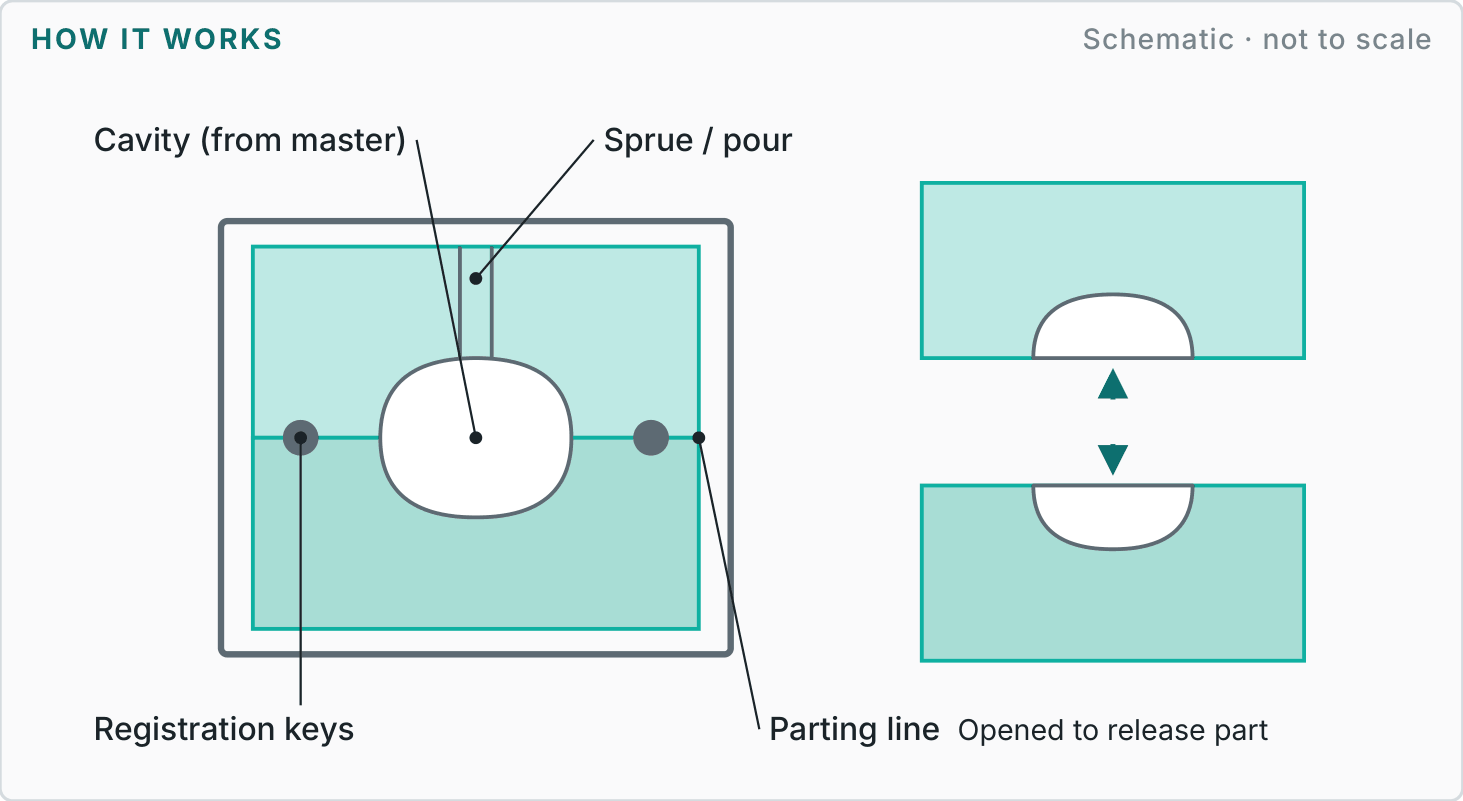
Decide split lines, keys, sprues and vents on the master.
Bed the master in clay or a printed former; pour half one.
Release, then pour the second half against the first.
Open, remove master, trial-cast and adjust vents.
Reference figures
Typical industry values to help you plan. We agree the figures for your part on the drawing.
| Materials | Platinum and tin-cure silicones; casting media include polyurethane, epoxy, wax, soap, gypsum, concrete and food. |
|---|---|
| Finishes | As master; matte or gloss. Release agents and barrier coats where the casting chemistry needs them. |
| Design guidance |
|
| Best suited to | Short-run parts, decorative products, construction and restoration castings, and production moulds for customers. |
| Watch-outs | Aggressive resins and heat shorten mould life. Long, thin parts may need a support jacket to avoid distortion. |
More in chapter A
Next step
Send a sketch, photo, sample or CAD file with your quantity and target date. We will recommend the most sensible route and explain the trade-offs before quoting.
Reference figures are typical published industry values for planning, not a guarantee; final tolerances, materials and finishes are agreed in writing for each project.